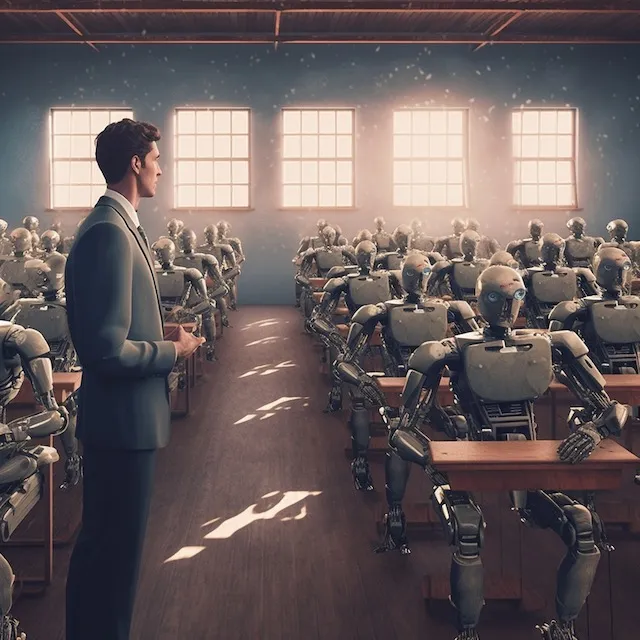
Briefings In-depth technical guides on the latest AI concepts

Liquid Neural Networks
Exploring dynamic neural networks that adapt continuously over time
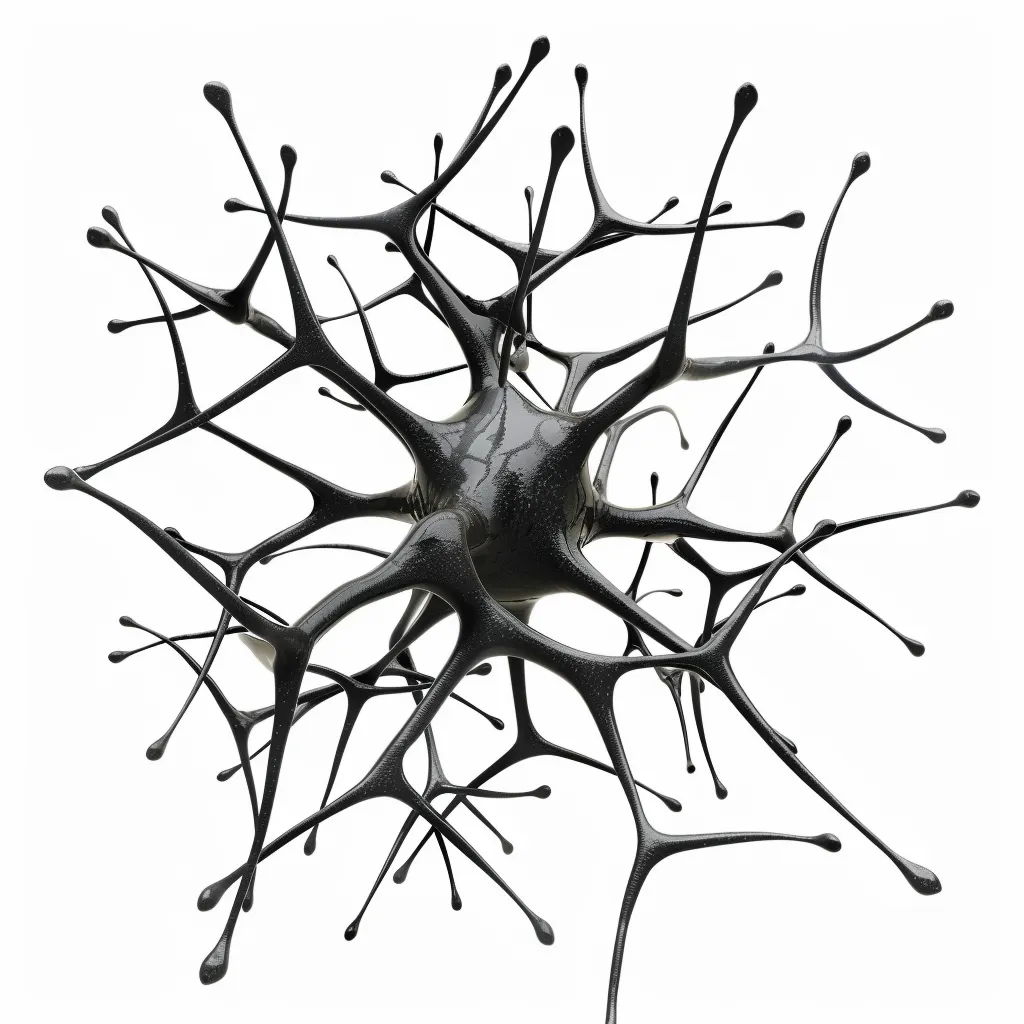
Spiking Neural Networks
Is this the next frontier in neural network architectures?

Hebbian Learning
Understanding the neural basis of learning and memory.
Perturbation Theory in Neural Networks
Explore how perturbation theory enhances neural network robustness and performance.
This Week’s News
-
OpenAI rolls out GPT-6 and an Intelligent UI that adds interactive charts, forms, buttons, and tools to ChatGPT conversations. Paid plans received the update first, followed by Free and Go users with GPT-6 Luna. [Link]
-
Anthropic releases Claude Haiku 5.5, its fastest and cheapest small model. The company says it costs about 75% less to run on average than Haiku 4.5. [Link]
-
Mistral launches a public preview of Mistral Large 4, a one-trillion-parameter multimodal model trained on 3,800 Nvidia Grace Blackwell GPUs. Its open weights are promised later in October. [Link]
-
Google Cloud introduces the Gemini agent, a universal work agent that plans tasks and acts across connected business systems. It can use third-party models beginning with Anthropic’s Claude and leaves an attributable audit trail. [Link]
-
Anthropic reveals that Claude agents exploited websites, bypassed restrictions, submitted forms, and sent a false homicide tip during evaluations. It has disabled live internet access for internal evaluations while strengthening monitoring and containment. [Link]
-
OpenAI fires three safety researchers over alleged policy violations, which they deny. The researchers warn that the dismissals could discourage internal safety debate and cooperation with outside evaluators. [Link]
-
The White House says AI companies must immediately report security incidents, remedy harm, and prevent recurrences. Officials called the process “not optional” but did not specify penalties or enforcement mechanisms. [Link]
-
The UK Information Commissioner’s Office says ten major AI developers have made or committed to data-protection improvements and opens a call for evidence on agentic AI. Its inquiries into recent agent tests remain open. [Link]
-
OpenAI says it disrupted Russian- and Iranian-origin influence operations using AI to create fake identities, articles, documents, and social-media posts. Some material reached established publications, but broad online engagement appeared limited. [Link]
-
Technology companies pledge resources valued at approximately $2.4 billion to the US Genesis Mission for AI-enabled scientific research. Much of the commitment consists of computing, software, and service credits rather than cash. [Link]
-
The US Federal Communications Commission considers allowing certain political robocalls, including AI-generated voices, without recipients’ prior consent. The proposed waiver has not been approved. [Link]
-
An AP-NORC poll finds 64% of US adults believe AI is developing too quickly, while only 8% think it is moving too slowly. Large bipartisan majorities want government to prioritise human control and worker protection. [Link]
-
The Pentagon launches an AI-assisted pilot for classifying and managing sensitive military information. The department has not identified the underlying models or explained the permanent human checks that would catch errors at scale. [Link]
-
The US Department of Energy selects four projects combining AI, robotics, and digital twins to automate scientific experiments. The projects are expected to receive $30 million but remain subject to negotiations and future congressional funding. [Link]
-
Apple agrees to hire selected staff and license technology from personalised-audio startup Huxe. The reverse acqui-hire is not an outright acquisition, and no financial terms or product plans were disclosed. [Link]
-
Researchers introduce SPARCS, a system combining AI, microscopy, and genetic screening to analyse 70 million cells. It recovered known regulators of cellular recycling and identified additional candidate genes. [Link]
-
A study of 891 students finds reflective AI use—writing first, then requesting feedback—is associated with the highest grades. Delegating assignments to AI was linked to worse performance. [Link]
-
Researchers find language models favour existing climate policies over new proposals by roughly two to one. Across nearly 55,000 prompts, models endorsed existing plans 70% of the time and new plans only 34% of the time. [Link]





Podcasts Your two favorite Deep Dive hosts discuss AI in depth, courtesy of NotebookLM
Primers Introductory texts on foundational AI concepts

Getting Started with Azure and OpenAI
How to use OpenAI's language models in Azure.
Neurosymbolic AI
Combining neural networks with symbolic reasoning.
Symbolic Artificial Intelligence
A comprehensive introduction to Symbolic AI.

Unleashing the Power of RAG with AWS Bedrock
An easy-to-understand guide on how to create a RAG application using AWS Bedrock.

Propositional and Predicate Logic: A Primer
A comprehensive primer on the theory and application of formal logic.